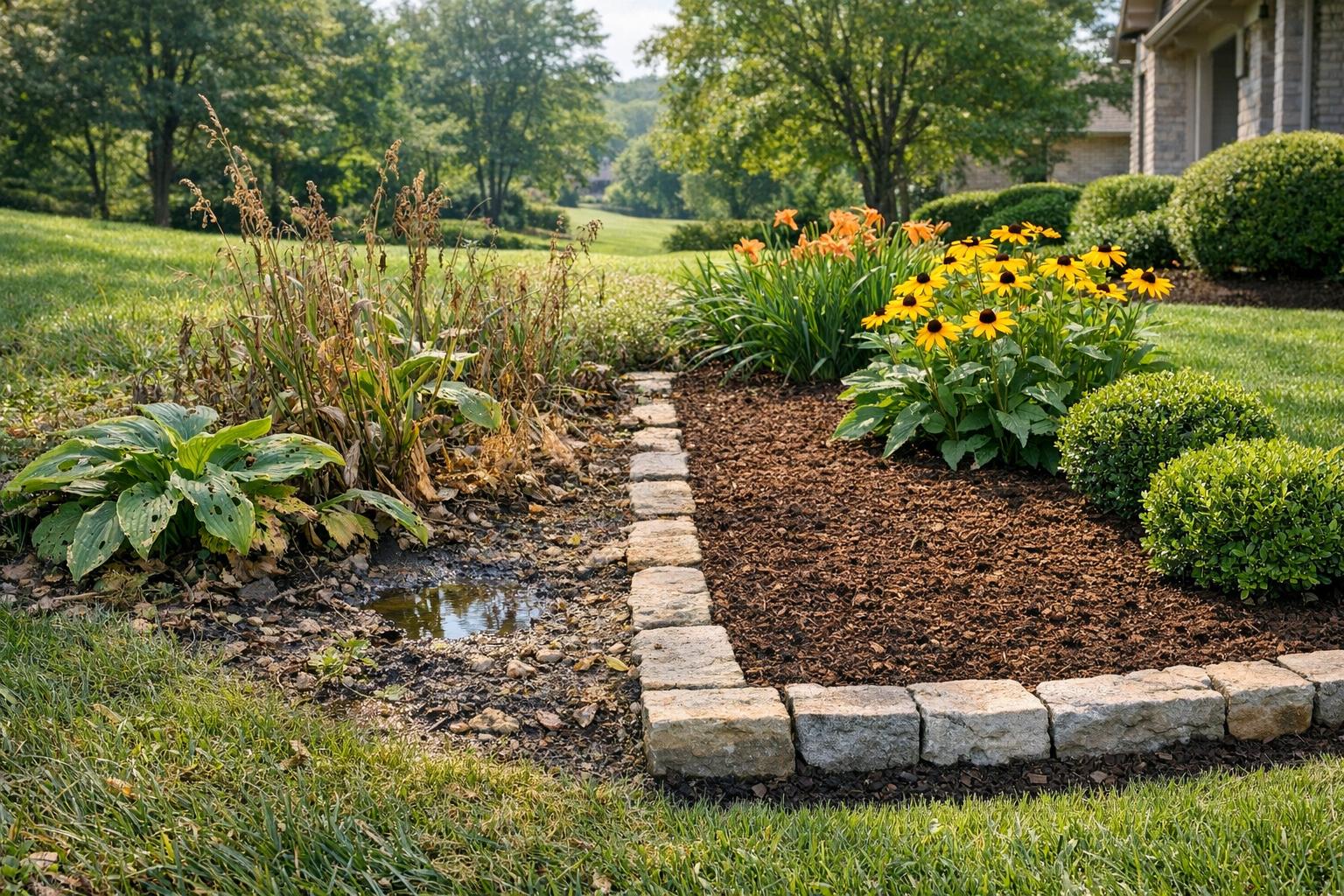
For a healthy lawn, mow based on your grass type, season, and growth rate. In Middle Tennessee, cool-season grasses like Tall Fescue need mowing every 5–7 days during spring and fall, while warm-season grasses like Bermuda require weekly mowing in summer. Stick to the one-third rule: never cut more than a third of the grass blade at once to avoid stressing the lawn. Use sharp mower blades, mow when grass is dry, and leave clippings on the lawn for natural fertilization. Proper mowing schedules and techniques ensure a lush, resilient lawn year-round.

Middle Tennessee Grass Types: Mowing Heights and Seasonal Schedule Guide
How to Mow Your Lawn Explained | Hight and Frequency
sbb-itb-0cecc4c
Common Grass Types and Recommended Mowing Heights
In Middle Tennessee, the climate supports both cool-season and warm-season grasses. Choosing the right mowing height for your grass type is essential - it impacts the lawn's resilience to drought and heat while influencing how often you’ll need to mow to keep it healthy. For Nashville-area lawns, the most suitable grass species fall into two main categories based on their seasonal growth patterns.
Cool-Season Grasses: Fescue and Kentucky Bluegrass
Tall Fescue is a favorite in Middle Tennessee because it stays green for longer periods and handles drought well. For best results, mow it between 2.5 and 4.0 inches, leaning toward the higher end during summer to encourage deeper root growth. This grass grows most vigorously in spring and fall but may struggle or go dormant during the peak summer heat.
Kentucky Bluegrass thrives with a shorter mowing height - around 1.5 to 2.5 inches. Its rhizome growth habit creates a dense, lush lawn, but its shallow roots make it less drought-tolerant compared to Tall Fescue.
| Grass Type | Mowing Height | Growth Period | Drought Tolerance |
|---|---|---|---|
| Tall Fescue | 2.5"–4.0" | Spring & Fall | High |
| Kentucky Bluegrass | 1.5"–2.5" | Spring & Fall | Low |
Cool-season grasses require higher mowing heights, but warm-season grasses come with a different set of needs.
Warm-Season Grasses: Bermuda and Zoysia
Bermudagrass loves the summer heat and grows quickly, often requiring frequent mowing. For common varieties, keep it at a height of 1.5 to 2.5 inches, while hybrid Bermudagrass performs best when trimmed between 0.5 and 1.5 inches. Bermudagrass thrives in temperatures between 80°F and 95°F, but it goes dormant and turns brown when temperatures drop below 55°F.
Zoysiagrass grows more slowly than Bermudagrass, reducing the need for frequent mowing. It’s typically cut between 1.0 and 2.5 inches, with many opting for 1.0 to 2.0 inches for a neater appearance. Unlike Bermudagrass, Zoysiagrass offers moderate shade tolerance but recovers more slowly from damage.
Both warm-season grasses stop growing and turn brown during the winter months. To maintain a green lawn during this dormant period, some homeowners overseed Bermudagrass with perennial ryegrass in the fall.
Seasonal Mowing Schedules for Middle Tennessee
Middle Tennessee’s unique position in the transition zone means your lawn care routine changes with the seasons, as grass moves between active growth and dormancy. Following professional lawn care tips ensures your yard stays resilient through these fluctuations.
Spring: Weekly Mowing for Growth Spurts
Start mowing in late March or early April when soil temperatures reach 50–55°F and grass begins growing. During April and May, Tall Fescue often requires mowing every 5–7 days due to its rapid growth. For warm-season grasses like Bermuda and Zoysia, plan for mowing every 7–10 days. Spring’s frequent rains can cause extra growth, so stick to the one-third rule to avoid cutting off too much at once. As temperatures climb, adjust your mowing schedule to handle summer’s growth demands.
Summer: Adapting to Heat and Drought
In the summer months, Bermuda and Zoysia typically need mowing every 5–7 days from June through August. However, Tall Fescue slows down in the heat, so mowing every 10–14 days is usually enough. To help Fescue survive the heat, raise the mower blade to 4 inches during heatwaves. This taller cut provides shade for the soil and protects the roots.
Fall and Winter: Mowing Less as Growth Slows
As temperatures drop, grass growth naturally slows. In September, Tall Fescue becomes more active again and may need mowing every 5–7 days. Meanwhile, Bermuda and Zoysia slow down and usually require mowing about every 10 days. The first frost, typically around October 8, signals the start of dormancy. By November, warm-season grasses stop growing altogether, while cool-season grasses like Fescue may need trimming every 3–4 weeks during mild winter periods. Once the grass is fully dormant, stop mowing and avoid walking on frosted turf to prevent crown damage.
Understanding these seasonal shifts will help you maintain a healthy lawn year-round.
| Season | Bermuda | Tall Fescue | Zoysia |
|---|---|---|---|
| Early Spring (March) | Every 10–14 days | Every 7–10 days | Every 10–14 days |
| Late Spring (April–May) | Every 7–10 days | Every 5–7 days | Every 7 days |
| Summer (June–August) | Every 5–7 days | Every 10–14 days | Every 7 days |
| Fall (Sept–Oct) | Every 10 days | Every 5–7 days | Every 10 days |
| Winter (Nov–Feb) | Dormant (As needed) | Every 3–4 weeks | Dormant |
Factors That Affect Mowing Frequency
How often you need to mow your lawn depends on several factors. These include weather, soil health, fertilization, and proper mowing techniques. Each of these plays a role in determining how quickly your grass grows and when it’s time to bring out the mower.
Weather: Rainfall and Temperature Effects
Middle Tennessee’s spring rains and rising temperatures can lead to rapid grass growth, especially for warm-season grasses like Bermuda. During this time, you might find yourself mowing every 5–7 days to keep up. Summer storms can also contribute to heavy growth, adding to the workload.
Temperature is another key player. Cool-season grasses, such as Tall Fescue, slow their growth during the hot and humid summer months, requiring mowing only every 10–14 days. On the other hand, warm-season grasses thrive in the heat, growing steadily until temperatures dip below 50°F. For cool-season grasses, growth typically halts when it gets colder than 40°F.
Avoid mowing wet grass - whether from rain or morning dew - as it can result in uneven cuts, clumping, and even fungal issues. The best time to mow is mid-morning (8:00 AM–10:00 AM) after the dew has dried or early evening (4:00 PM–6:00 PM) to minimize stress on freshly cut blades.
Soil Health and Fertilization
The condition of your soil significantly affects grass growth. Healthy, nutrient-rich soil supports steady growth, while compacted or nutrient-depleted soil can lead to patchy and stressed grass. Fertilization can further influence mowing frequency, as it often accelerates growth after application.
In Middle Tennessee, fertilization schedules vary by grass type. Warm-season grasses like Bermuda and Zoysia are fertilized during the warmer months, while cool-season grasses like Fescue benefit from fertilization in the fall and early spring. Both schedules can lead to periods of rapid growth, requiring more frequent mowing.
Soil testing every 2–3 years is a smart step to optimize fertilization efforts. This ensures you’re providing the right nutrients without overdoing it, which can lead to excessive growth that’s hard to manage. Aerating your lawn in spring or fall can also improve oxygen flow and nutrient absorption, especially in Middle Tennessee’s compacted or rocky soils.
The One-Third Rule for Grass Cutting
A simple yet effective guideline for mowing is the one-third rule: never cut more than one-third of the grass blade’s height in a single session. This approach, developed by U.S. Department of Agriculture scientists over 60 years ago, helps grass retain enough leaf surface for photosynthesis and encourages strong root systems.
Cutting too much at once forces the grass to focus on regrowing its leaves instead of strengthening its roots. To decide when to mow, use this formula: (Ideal Mowing Height ÷ 2) x 3. For example, if Tall Fescue’s ideal height is 3 inches, mow when it reaches about 4.5 inches.
"Using it can help prevent (shock) when a significant amount of top growth is removed at once. This often cuts into the stem of the plant, rather than just leaf material. Turfgrass plants may not recover as quickly from the stress of those severe (low) cuts as well."
– Dr. Grady Miller, Distinguished Professor in Turfgrass Management, NC State University
If your lawn becomes overgrown due to rain or other delays, don’t cut it all down at once. Instead, mow gradually, removing one-third of the height at a time, with at least three days between sessions. During hot summer months, raise your mower height by about 0.5 inches to help the grass shade the soil and retain moisture.
These practices help maintain a healthy, resilient lawn, even in Middle Tennessee’s unpredictable conditions.
| Grass Type | Ideal Cutting Height | Mow When Grass Reaches |
|---|---|---|
| Bermuda | 1.0–2.0 inches | 1.5–3.0 inches |
| Zoysia | 1.0–2.0 inches | 1.5–3.0 inches |
| Kentucky Bluegrass | 2.0–3.0 inches | 3.0–4.5 inches |
| Tall Fescue | 2.5–4.0 inches | 3.75–6.0 inches |
Best Practices for Lawn Mowing
Achieving a lush, healthy lawn in Middle Tennessee comes down to a few smart practices. Using sharp blades, mowing at the right time, and choosing the right equipment can make a noticeable difference in how your lawn looks and thrives.
Equipment and Mowing Techniques
Sharp blades are a must. Dull blades don’t cut grass cleanly - they tear it. This leaves frayed edges that are more likely to attract pests and diseases. To avoid this, plan to sharpen your mower blades every 4 to 6 mowings. If you’re mowing regularly, that means sharpening at least twice a season. It’s also a good idea to keep a spare blade handy.
"Dull blades produce a ragged cut edge, making it more susceptible to insect and disease incidence."
– J. Bryan Unruh, Associate Center Director, West Florida Research and Education Center
Switch up your mowing pattern each time you mow. This encourages grass to grow upright, resulting in a thicker lawn that naturally crowds out weeds.
For the best results, mow when the grass is dry. Wet grass clumps together, which can smother parts of your lawn and leave uneven patches. Mowing during cooler parts of the day also helps reduce stress on the grass caused by heat.
Don’t forget about maintaining your equipment. Tasks like changing the oil every 25 hours of use and checking spark plugs and air filters can extend your mower’s lifespan to 5–10 years. These maintenance jobs take just a couple of hours but make a big difference in performance. Always disconnect the spark plug or battery before starting any maintenance work.
Grasscycling: Leaving Clippings on Your Lawn
Leaving grass clippings on your lawn - known as grasscycling - saves time and doubles as a natural fertilizer. Clippings are 75% to 85% water and decompose quickly, releasing key nutrients like nitrogen, phosphorus, and potassium back into the soil. This process can provide up to 40% of your lawn’s annual nitrogen needs, potentially saving you $50 to $100 on fertilizer each year.
Unlike thatch, which builds up slowly, grass clippings break down fast and don’t contribute to lawn buildup. Plus, skipping the bagging step can save you 30–40 minutes every time you mow.
To make grasscycling work, follow the one-third rule: never cut more than one-third of the grass height at a time. Use sharp blades to finely chop clippings so they reintegrate into the soil quickly. You’ll only need to bag clippings in specific cases, like when the grass is over 10 inches tall, if there’s an active disease, or during the first month after seeding. During the peak spring growth season in Middle Tennessee, mowing every 5–7 days keeps clippings small and manageable.
Professional Lawn Care Services
If keeping up with mowing schedules and equipment upkeep feels overwhelming, professional lawn care services can simplify the process. Companies like Diamond Lawn Services handle everything from blade sharpening to maintaining the ideal cutting height for your lawn. Serving Williamson and Davidson County for over 9 years, their team understands the specific needs of local grass types and seasonal growth patterns. They offer free estimates and upfront pricing, ensuring your lawn gets the care it needs without any surprises. With their expertise, you can count on consistent results tailored to Middle Tennessee’s unique conditions.
Conclusion
Keeping a Middle Tennessee lawn in top shape means sticking to a regular, seasonally adjusted mowing schedule. For cool-season grasses like Tall Fescue, mow every 5–7 days during spring and fall, and scale back to every 10–14 days in the summer. Warm-season grasses like Bermuda and Zoysia, on the other hand, usually require weekly mowing during the hotter months.
Stick to the one-third rule: avoid cutting more than one-third of the grass blade at a time. This simple guideline helps minimize stress on the lawn and reduces the chances of weed growth.
To maintain a lush, green lawn, ensure your mower blades are sharp, use the correct cutting heights, and practice grasscycling (leaving clippings on the lawn). Together, these steps create a well-rounded care routine.
As Pure Green highlights:
"Establishing a lawn care schedule that aligns with these seasonal shifts is crucial, as temperatures fluctuate from the chilly winters to the hot, humid summers." - Pure Green
If managing this routine feels like too much, consider Diamond Lawn Services. With over nine years of local experience, they offer customized, stress-free solutions to help your lawn thrive. Whether you handle mowing yourself or trust the pros, consistent care is the key to avoiding overgrowth, managing weeds, and keeping your lawn looking its best year-round.
FAQs
How do I figure out what grass type I have?
To figure out what type of grass you have, start by examining the width and texture of the blades. Fine blades are often found in fescues or bluegrass, while medium-width blades could mean ryegrass or zoysia. If the blades are coarse, you’re likely looking at tall fescue or St. Augustine grass.
Next, take a look at how it grows. Does it form clumps, or does it spread out across the ground? Also, pay attention to the color. Dark green, glossy grass might point to one type, while a dull, light green shade suggests another.
Still not sure? A local lawn care expert can give you a definitive answer.
What should I do if my lawn gets too tall to follow the one-third rule?
If your lawn has grown too tall to follow the one-third rule, don’t worry - you can still get it back on track. Mow it to the recommended height, but make sure you’re not cutting more than one-third of the blade length at a time. For instance, Bermuda grass thrives when kept at 2–3 inches, while tall fescue does best at 3–3.5 inches. To avoid stressing the grass, trim it gradually over one or two passes. This approach helps maintain both the health of your lawn and its clean, well-kept appearance.
When should I bag clippings instead of leaving them on the lawn?
When your grass is tall or overgrown, or when leaves cover your lawn, it's a good idea to bag the clippings. This helps avoid smothering the grass, reduces the risk of disease, and prevents weeds from spreading - keeping your lawn in better shape.