Lawn aeration is essential for maintaining a healthy yard, especially in areas like Brentwood, TN, where clay-heavy soil can lead to compaction. Aeration involves creating small holes in the soil to improve airflow, water absorption, and nutrient delivery to grass roots. For Brentwood lawns, core aeration is the most effective method, particularly for dense clay soil. The best times to aerate are in spring (late April to early May) and fall (September to October), aligning with the growth cycles of popular grasses like Fescue. Regular aeration helps prevent issues like thatch buildup, poor drainage, and thinning grass, ensuring your lawn stays strong year-round.
Key Takeaways:
- Why Aerate? Relieves soil compaction, improves nutrient absorption, and promotes deeper root growth.
- When to Aerate? Spring (April-May) and Fall (September-October) for Fescue lawns.
- Best Method: Core aeration is better than spike aeration for Brentwood’s clay-heavy soil.
- Post-Aeration Care: Overseed within 24 hours, water regularly, and fertilize to maximize results.
By sticking to a consistent aeration schedule, you can transform compacted, struggling lawns into lush, thriving yards.

Brentwood TN Lawn Aeration Schedule: Best Times to Aerate Your Yard
Improving Clay Soil With Regular Aeration And Topdressing
sbb-itb-0cecc4c
Best Times to Aerate Your Lawn in Middle Tennessee
Timing is everything when it comes to aerating your lawn. In Middle Tennessee, fall is the ideal season for aerating Fescue lawns, particularly in areas like Brentwood. Cooler weather paired with increased rainfall creates the perfect environment for grass to recover and thrive. Aerating in early fall gives your lawn enough time to recover before the first frost, ensuring it stays strong through the winter and into spring.
Spring is another opportunity for aeration. For Fescue lawns, early May aligns with the grass's active growth period. This timing allows air, water, and nutrients to penetrate the soil and reach the roots when the grass is ready to absorb them. Aerating in both spring and fall helps combat soil compaction - a common issue in Brentwood's dense clay soil. The schedules below highlight these seasonal opportunities for aeration.
Fall and Spring Aeration Schedules
Fall aeration is especially effective because it coincides with Fescue's natural growth cycle. As a cool-season grass, Fescue flourishes when temperatures drop, and rainfall increases. According to SCW Group, "Fall is the optimal time for aerating and overseeding for several reasons, especially in Middle Tennessee's climate. The cooler temperatures combined with increased rainfall create the perfect conditions for grass to recover and grow". This recovery period is essential, giving your lawn the strength it needs before winter dormancy.
In spring, as the soil begins to warm in April and early May, Fescue roots become active. To ensure successful aeration during this time, make sure the soil has enough moisture to prevent stress on the grass.
Knowing when your lawn needs attention is just as important as timing.
Signs Your Lawn Needs Aeration
Compacted soil often reveals itself through obvious signs. If water pools on the surface or runs off instead of soaking in, the soil is likely too dense. You may also notice thinning grass or bare patches - both of which can occur when compacted soil blocks roots from accessing nutrients.
Another indicator is excessive thatch buildup. This spongy layer of dead grass and organic material accumulates between the soil and the green grass, preventing water and nutrients from reaching the roots. Poor water absorption during rain is another red flag. If puddles form quickly or water runs off instead of penetrating the soil, compaction is likely the culprit, and aeration can help restore proper drainage.
Core Aeration vs. Spike Aeration
Brentwood's dense, clay-heavy soil requires a tailored approach to aeration. Two common methods - core aeration and spike aeration - differ in how they address soil compaction and promote lawn health. Core aeration involves removing small plugs of soil to create space for air, water, and nutrients to penetrate the roots. On the other hand, spike aeration uses solid tines to punch holes in the ground without removing any soil.
For the clay-rich soil in Brentwood, core aeration is the better option for addressing compaction. According to Virginia Tech Extension:
"Core aeration is very disruptive to surface smoothness, but it is the best way to relieve the physical limitations of soil compaction and improve soil oxygen levels."
Spike aeration, while simpler, can actually worsen compaction in clay soils by pushing the soil sideways rather than removing it. This makes it a temporary solution at best.
Core aeration works by extracting soil plugs - usually 2 to 3 inches deep and spaced about 2 to 3 inches apart. These plugs naturally break down over three to four weeks, serving as a natural top dressing that helps decompose thatch. This process creates long-lasting channels for essential nutrients, water, and air to reach the roots, promoting healthier grass growth.
If you're unsure whether your lawn needs core aeration, try the screwdriver test: push a screwdriver into moist soil. If it doesn't easily penetrate to a depth of 3 inches, your lawn is likely too compacted and would benefit from core aeration.
The following table highlights the key differences between core and spike aeration, underscoring why core aeration is the preferred choice for Brentwood's clay-heavy soil.
Method Comparison Table
| Feature | Core Aeration | Spike Aeration |
|---|---|---|
| Method | Removes soil plugs (cores) | Pokes holes with solid spikes |
| Compaction Reduction | High (long-term solution) | Low (temporary/short-term) |
| Best Soil Type | Heavy clay and compacted soil | Sandy or mildly compacted soil |
| Brentwood Suitability | Recommended for clay-heavy yards | Not recommended for clay; increases compaction |
| Equipment | Gas-powered or manual pluggers | Spiked shoes, pitchforks, or rolling spikes |
| Pros | Improves root health; reduces thatch | Affordable; no soil cleanup required |
| Cons | Leaves temporary soil plugs on lawn | Can increase soil density over time |
This comparison makes it clear that core aeration is the better method for Brentwood lawns, setting the stage for a deeper dive into how to perform it effectively.
How to Perform Core Aeration
Core aeration works particularly well for Brentwood's clay soil. Here's a step-by-step guide to ensure you get the best results.
Preparing Your Lawn
Start by mowing your lawn to a height of 2-3 inches. Then, water the lawn about 24 hours before aerating. The goal is to have soil that's moist but not overly saturated. Moist soil allows the aerator's tines to penetrate deeply, while dry or compacted soil can limit the effectiveness of the process.
Before you begin, take a walk around your yard and mark any sprinkler heads, shallow utility lines, or other hidden obstacles using flags. This step is crucial because core aerators can easily damage sprinkler components, which can lead to expensive repairs. If your lawn has a heavy layer of thatch, consider dethatching it before aerating.
Operating a Core Aerator
The right aerator for your lawn depends on its size:
- Manual aerators are ideal for small areas or tight spaces. They look like garden forks with a horizontal foot bar to ensure consistent depth.
- Electric or gas-powered aerators are better for medium-sized lawns. These self-propelled machines have rotating tines and require less physical effort.
- Tow-behind aerators are perfect for large properties and can be attached to a lawn tractor or ATV for quicker coverage.
When using the aerator, make overlapping passes across the lawn, similar to how you would mow. Move in straight lines, slightly overlapping each row, and focus on high-traffic areas by making additional passes. Aim for plugs that are 2-3 inches deep and spaced 2-3 inches apart. This spacing promotes healthy soil and root development.
Once you've finished aerating, it's time to focus on post-aeration care.
What to Do with Soil Plugs
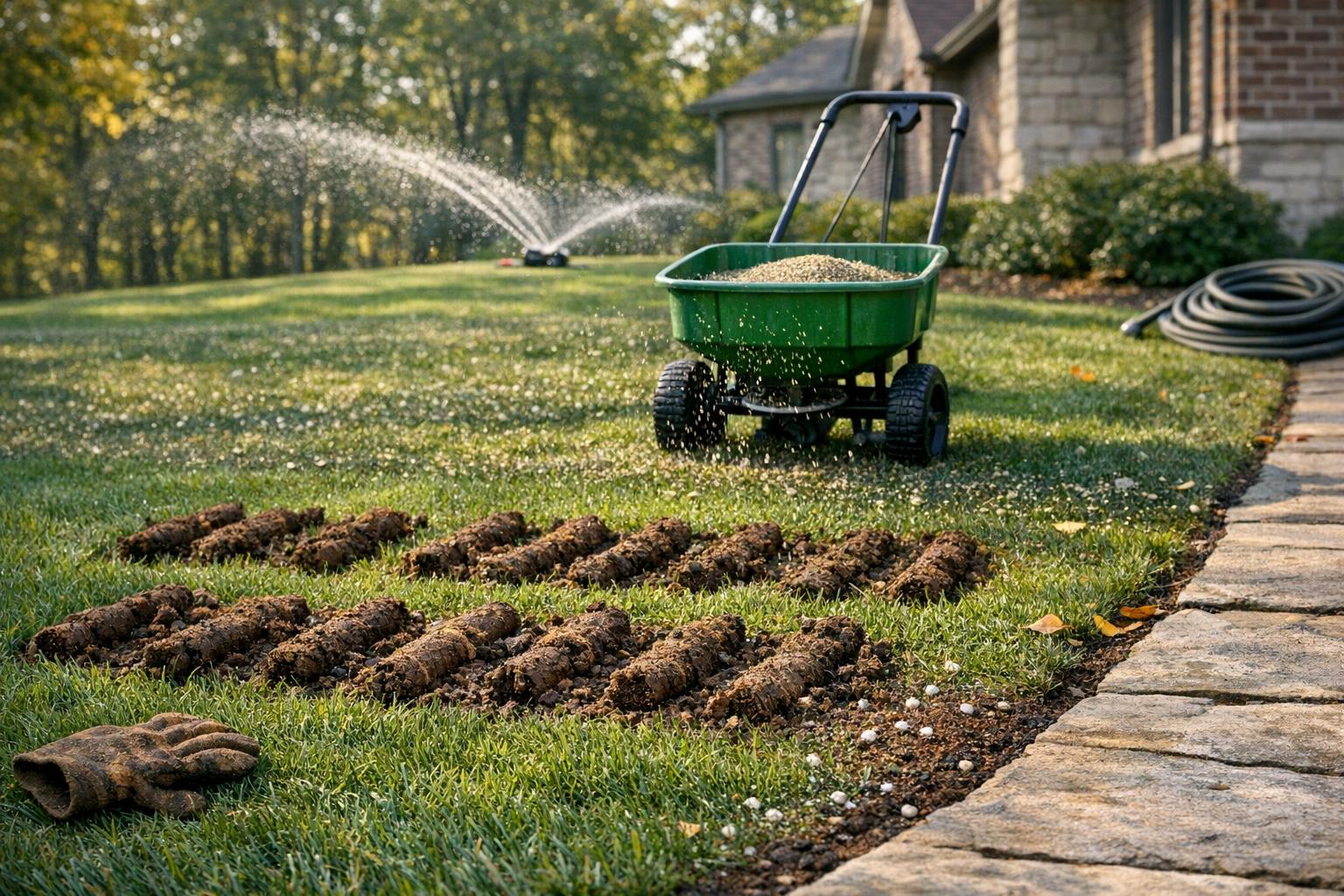
After aerating, you'll notice small soil plugs scattered across your lawn. There's no need to remove them. Letting these plugs decompose naturally is the best approach. Over the course of 3-4 weeks, they will break down, adding nutrients back into the soil and acting as a natural top dressing. This process also helps reduce thatch buildup.
If you prefer a tidier look, you can rake up and remove the plugs. However, doing so takes away beneficial organic material that your lawn can use. For most Brentwood homeowners, leaving the plugs to break down naturally is the most effective and low-maintenance option.
Lawn Care After Aeration
Once you've completed aeration, the next steps are all about helping your lawn make the most of its improved soil structure. Proper care after aeration ensures that water, nutrients, and air can penetrate deeply, giving your grass the best chance to thrive.
Overseeding After Aeration
Aeration creates an ideal environment for overseeding because the small holes provide excellent seed-to-soil contact. In areas like Brentwood, where cool-season Fescue is a popular choice among Middle Tennessee grass types, spring overseeding can be especially effective. To get the best results, spread a high-quality Fescue seed blend within 24 hours of aeration. This timing ensures the seeds take full advantage of the loosened soil. Afterward, water and fertilize right away to support seed germination and lawn recovery.
Watering and Fertilizing Schedule
Watering and fertilizing correctly after overseeding are key to keeping the soil moist and feeding the roots. If there's not enough rainfall, water your lawn immediately to maintain moisture levels. Within 24-48 hours after aeration, apply a balanced fertilizer to ensure nutrients reach the root zone through the aeration holes.
"Aeration relieves soil compaction, improves water and nutrient movement in the soil, and prevents thatch accumulation." – Aaron Steil, Iowa State University Extension
For an extra boost, top-dress your lawn with a thin 1/4-inch layer of fine compost. This not only improves soil quality but also helps break down the soil plugs faster, returning nutrients back to the lawn.
Conclusion
The strategies and timing outlined above are key to keeping a Brentwood lawn in great shape. Aeration plays a vital role in maintaining healthy, thriving grass, especially in the heavy clay soils common in Middle Tennessee. For Tall Fescue lawns, the best time for aeration is during the fall, specifically between September and October, though early May in the spring can also be helpful. For Bermuda or Zoysia lawns, late spring to early summer (May through June) is ideal, as this aligns with their active growth period.
Whether you choose to handle aeration on your own or work with Diamond Lawn Services, sticking to a regular schedule - once a year or twice annually for high-traffic areas - can turn a thin, struggling lawn into a dense, vibrant yard.
FAQs
How often should I aerate my lawn in Brentwood?
Aerating your lawn in Brentwood is typically advised once or twice a year. For Fescue grass, the best time to do this is in spring, around early May. How often you should aerate depends on factors like soil compaction and how much foot traffic the lawn endures. Aerating 1-2 times a year can reduce compaction and promote healthier grass growth.
Can I aerate if my lawn is weedy or stressed?
Aerating a weedy or stressed lawn is absolutely possible - and it can actually help improve its condition. By aerating, you enhance soil health, which allows the lawn to recover more effectively and reduces overall stress. To get the most out of aeration, pair it with good lawn care practices, like regular watering, fertilizing, and mowing. This combination encourages stronger, healthier grass growth, making it less vulnerable to weeds and other issues.
Should I aerate before or after applying weed control?
It's usually a good idea to tackle weed control before aerating your lawn. Why? Aeration punches holes into the soil, which can help herbicides seep in deeper and work more effectively. On the flip side, aerating afterward can help loosen compacted soil and encourage healthier grass growth, which naturally makes it tougher for weeds to thrive. To get the best results, give the herbicide some time to do its job before you start aerating.