If your yard stays soggy after rain, you are not alone. Drainage issues are common, especially in areas where water has nowhere to go or where runoff collects in low points. The good news is that many drainage problems can be improved with the right approach.
Common causes of standing water
- Low spots in the lawn that collect runoff
- Downspouts dumping water too close to the foundation
- Poor grading that directs water toward the home or patio
- Compacted soil that does not absorb water well
- Heavy shade that slows evaporation and grass recovery
Start with downspouts and runoff
Downspouts often cause the biggest problems. If the discharge ends near a foundation or along a walkway, water can pool and create muddy areas. Extensions or buried drainage lines can move that water to a better discharge point.
Regrading can solve a lot
Sometimes the fix is as simple as correcting the slope. Subtle grading changes can guide water away from problem areas and help the yard dry out faster.
When drains make sense
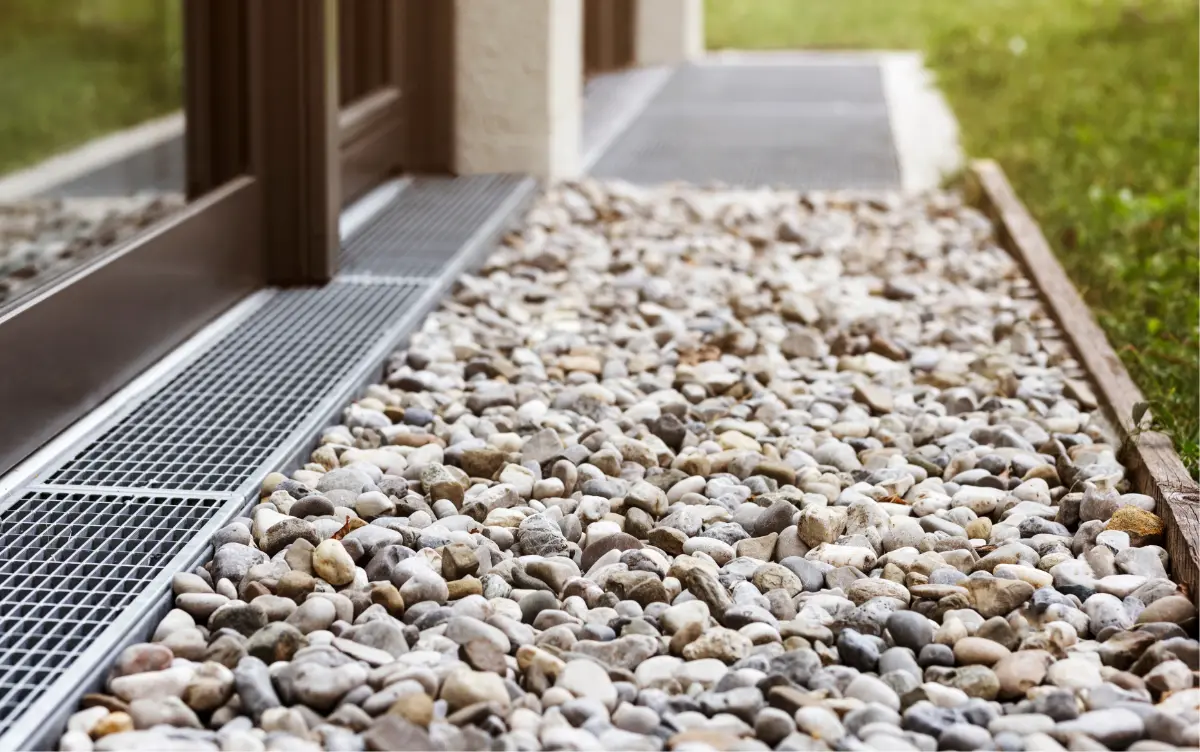
French drains, catch basins, and other drainage systems can help when water consistently collects in the same locations. The key is having a proper outlet so the system actually moves water away instead of just shifting the problem.
Do not ignore the long-term risks
Standing water can thin grass, encourage weeds, and increase erosion. In some cases, it can contribute to foundation or basement issues. Addressing drainage early usually costs less than repairing damage later.
A quick test
After the next rain, note exactly where water pools and where it is coming from. Mapping water flow is the first step to choosing the right fix.